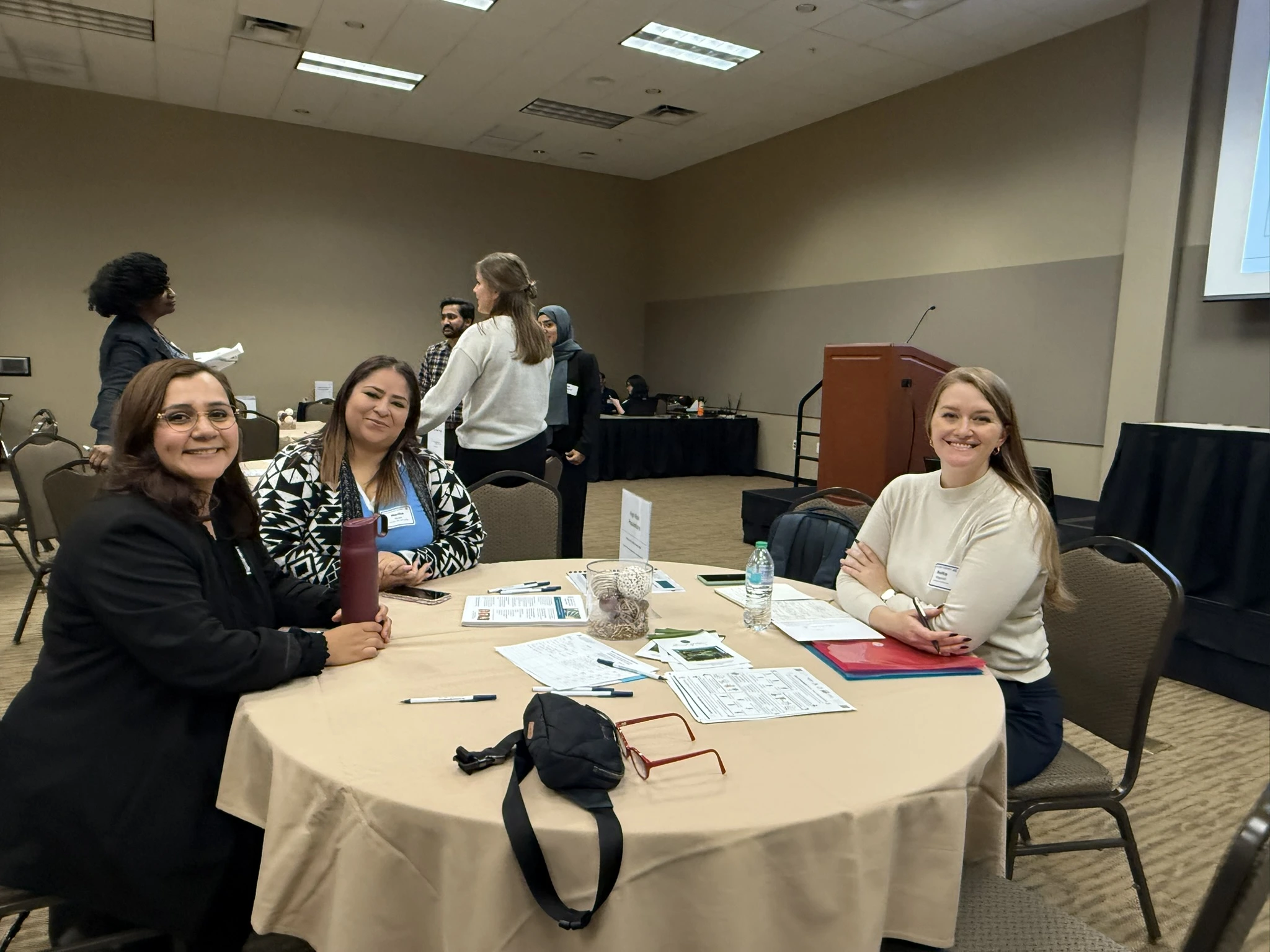
SCORCH at the 3rd Annual Arizona Heat Summit

UA SCORCH students, faculty, and staff - Rietta Wagoner, Maiya Block Ngaybe, Amelia Gallitano (UA College of Medicine, PHX), Cheryl Valdez, Laura Schweers, Mona Arora, Shunrang Chin, Imran Mithu, and Nathan Lothrop
The SCORCH team attended the 3rd Annual Arizona Heat Summit, November 19, 2025, in alignment with the center's ongoing commitment to advancing climate-health research, partnership, and community-driven solutions across Arizona. Among team members in attendance were Mona Arora, Maiya Block Ngaybe, Shunrang Chin, Nathan Lothrop, Imran Mithu, Laura Schweers, Cheryl Valdez, and Rietta Wagoner. The summit, hosted by the Arizona Department of Health Services, convened state agencies, local governments, public health departments, utilities, tribal representatives, and academic partners to examine the public health impacts of extreme heat and to share models for mitigation and response. The day featured presentations from the Arizona Department of Health Services, the National Weather Service, and local jurisdictions including Maricopa County, Pima County, and the City of Tucson, highlighting trends in heat-related illness and mortality, intensifying risks among unhoused populations and individuals who use substances, and emerging data-driven approaches to targeting resources more equitably. Sessions also emphasized adaptations implemented across the state including cooling center expansions, public water access, worker protection initiatives, and heat safety training. Overall, the presentations demonstrated cross-sector momentum toward coordinated heat preparedness and response.
SCORCH played an active role in the summit’s engagement and dialogue. Rietta Wagoner presented a brief overview of SCORCH’s mission and current initiatives, introducing our work at the intersection of research, practice, and policy. Mona Arora co-facilitated the “Tribal and Rural Heat Experiences” breakout session alongside Darien Fuller (COVID-19 Health Disparities Grant Epidemiologist for the Arizona Advisory Council on Indian Health Care), leading a focused heat listening session centered on the lived experiences of tribal and rural communities. This session elevated community perspectives on infrastructure gaps, historical trauma, energy insecurity, housing quality, and culturally grounded approaches to prevention. The discussion reinforced the urgency of inclusive planning, Indigenous data sovereignty, and respectful partnership, while also underscoring the importance of aligning public health action with community priorities. The SCORCH team left the summit with strengthened relationships and a renewed commitment to collaborative, equity-driven heat resilience work across Arizona, particularly with tribal and rural partners disproportionately impacted by extreme heat.